Click here for details on our special events and programs for children and adults,and upcoming teacher workshops in 2012/2013.


Montezuma Audubon Center
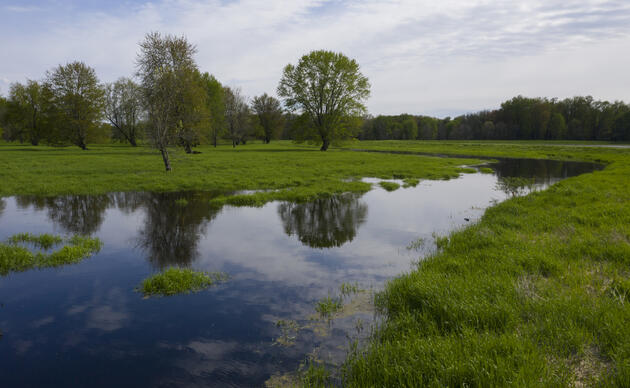
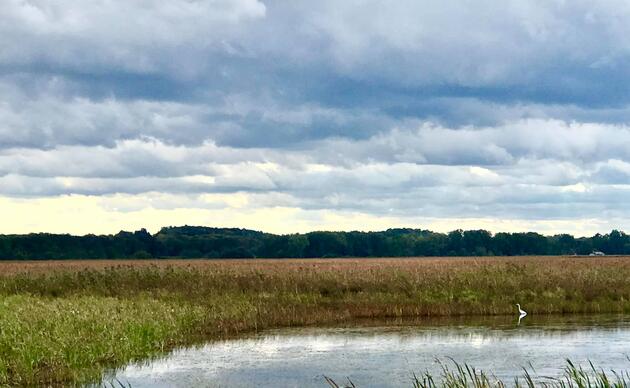
The Montezuma Audubon Center (MAC) is a state-owned facility operated through a cooperative agreement between the New York State Department of Environmental Conservation (DEC) and the National Audubon Society. The MAC houses a large exhibit area, classroom, nature store, office area, auditorium, and a meeting room. On its 198 acres, there are five different types of habitat, two restored freshwater marshes, a one-mile hiking trail, and an all-access observation platform. The Montezuma Wetlands Complex (MWC) is one of the largest conservation projects in the nation for reclamation of important wildlife and wetland habitat. The complex is a crucial migration stopover point for migrating waterfowl in the northeast.

Audubon New York operates the center, in partnership with the State Department of Environmental Conservation, the U.S. Fish and Wildlife Service, Ducks Unlimited, The Nature Conservancy, and Pheasants Forever in the planning of educational and interpretative programs and exhibits.

The MAC Education Director works closely with school groups throughout the greater Syracuse and Rochester areas and points between. Schools and other groups come to the MAC and learn about its unique surroundings. In addition, MAC staff facilitate educational outreach programs such as For the Birds!, a program that has had great success in New York City with urban youth.

The MAC is a great addition to the already amazing Montezuma Wetlands Complex. Visitors will be able to find a full day of activities by coming to enjoy the MAC, the National Wildlife Refuge, and all the creatures great and small in the MWC.

The Montezuma Audubon Center is open:
Tuesday through Saturday, from 10 am - 4 pm

Center Trail Map

Volunteers Needed at the MAC!

We're looking for people to help with the day to day activities and special events at the MAC including animal care (turtles, frogs, salamanders, and a snake) office support, gardening, trail maintenance, nature store assistance, educational programs, Wildlife Festival, and more! Please click here to complete a volunteer form and then return it via email. Click here for a list of upcoming volunteer events.

Recent News from Montezuma

Onondaga Lake pic

Community Volunteers and SUNY-ESF Students Plant Shrubs and Trees to Enhance Local Habitat

State University of New York College of Environmental Science and Forestry (SUNY-ESF) students join Onondaga Lake Conservation Corps to help protect the Onondaga Lake Watershed

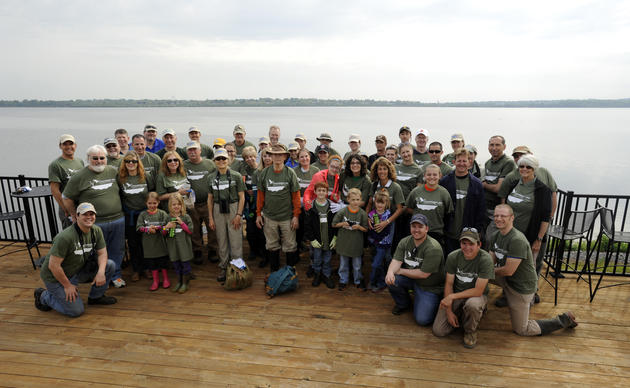
October 24, 2012 - Eighty-six volunteers from Central New York participated in the third Onondaga Lake Conservation Corps stewardship event at Nine Mile Creek and the Geddes Brook wetlands on Saturday, October 20. Volunteers planted 250 shrubs, plants, and trees, and learned about wetlands and their importance in supporting the Onondaga Lake watershed from habitat experts from the Montezuma Audubon Center, the Onondaga Audubon Society, Parsons, and Honeywell.

Student volunteers from SUNY-ESF plant a native tree to enhance habitat at
Nine Mile Creek.

Frank Moses, director of the Montezuma Audubon Center, leads volunteers on a birding walk to track native birds.

"Environmental stewardship directly relates to ESF's mission," said Liz Mix, community service and service-learning coordinator, SUNY-ESF. "Projects such as this give students the opportunity to live out our mission and impact the well-being of the environment and community."

Onondaga Lake Conservation Corps was founded with the goal of inspiring future stewards of Onondaga Lake and its watershed through a hands-on, experience-based program that offers citizens and organizations the opportunity to participate in activities that help restore and sustain the Onondaga Lake watershed and its value as an Important Bird Area.

"The Onondaga Lake Conservation Corps is maturing and expanding, creating a powerful new force for conservation and renewal," said Frank Moses, director of the Montezuma Audubon Center. "Community stewardship through the protection, restoration, and monitoring of habitat is key to a healthy and sustainable Onondaga Lake and its watershed."

Community volunteers get their hands dirty and plant trees at Nine Mile Creek.

Volunteers learn about wetlands from Joseph McMullen, principal environmental scientist at Terrestrial Environmental Specialists, Inc.

Volunteers from Westhill High School participate in the third Onondaga Lake Conservation Corps stewardship event.

"The native shrubs and trees planted by participants during Conservation Corps events will help re-establish habitat at the Geddes Brook wetlands and Nine Mile Creek," said Jeremy Neumann, senior scientist, Parsons. "We hope that those who participated will continue to educate and inspire others in the community to get involved."

Volunteer efforts will contribute to the transformation of 17 acres at Geddes Brook and 30 acres at Nine Mile Creek into diverse new habitats for wildlife. The areas will become part of a green corridor connecting habitat from Onondaga Lake to upland sites. Contaminated soil has been removed and 100,000 native shrubs, flowers, and trees are being planted. The projects will improve the ecosystem, and protect and enhance habitat and wildlife.

Since the formation of the Onondaga Lake Conservation Corps, three events have brought together more than 200 volunteers who became environmental stewards and members of the Conservation Corps. Additional activities will be planned in the coming months for volunteers to learn about, experience, and participate in the lake cleanup.

Organizations providing volunteers and staff at Saturday's event: Onondaga Audubon Society, Montezuma Audubon Center, Parsons, Honeywell, SUNY-ESF, Onondaga-Cortland-Madison Board of Cooperative Educational Services (BOCES), and Westhill High School.

To learn more about the Onondaga Lake Conservation Corps or participate in future activities, please contact Frank Moses at montezuma@audubon.org or call 315-365-3588.

For more information on the Onondaga Lake cleanup, please visit www.lakecleanup.com.


Recent Bird Sightings

Want to make sure your birding observations count towards more than a sense of satisfaction? Welcome to the future of birding! After exploring the Montezuma Wetlands Complex (MWC), you can enter your bird sightings back at the Center using an easy touch-screen. Your observations are then added to others in the eBird database that scientists and citizens use to understand more about bird distributions.

eBird was developed by the Cornell Lab of Ornithology and National Audubon Society and it enables anyone to enter bird sightings from anywhere in North America and explore the results. The eBird TrailTracker is a portal through which any birdwatcher can enter the birds they have observed into the eBird database.

Furthermore, you have the option to accurately map your observations on a large-scale map of the MWC. Every time you notice a bird, you are holding a piece of a puzzle. By sharing your sighting with others through eBird, you'll make it possible to complete the picture we need to better understand and protect birds well into the future.

Montezuma Birding Trail

Pied-billed Grebe
Dave Spier
The Montezuma Birding Trail website provides information on birding hotspots, recent sightings, events and species in the Montezuma Wetlands Complex north of Cayuga Lake between Rochester and Syracuse, NY. The driving trail loops through adjacent portions of Wayne, Seneca and Cayuga counties and covers Montezuma NWR, the Northern Montezuma WMA and related public-access sites. For more information, contact them via email.

Help Give Montezuma Wildlife a Better Place to Live!

The Montezuma Alliance for the Restoration of Species and Habitats (MARSH) is part of a larger effort to restore, protect and enhance wildlife habitat on nearly 50,000 acres of the Montezuma Wetlands Complex. This volunteer group helps support these habitat restoration efforts. The work is hands-on as we cut and pull invasive species and replant natives that will be more beneficial to wildlife and less harmful to Montezuma habitats overall.  Click here for more details.

DIRECTIONS: The Montezuma Audubon Center is located approximately 2 miles north of the Hamlet of Savannah on State Route 89 and is a part of the 36,000 acre Montezuma Wetlands Complex (MWC).

From the west: take the New York State Thruway (Route 90) to exit 42. Turn left onto Route 14 and follow for approximately 12 miles until you reach the intersection with Route 31. Turn right and follow Route 31heading east into Savannah, about 15 miles. Turn left heading north at the blinking light onto State Route 89. The Center will be on your left approximately 2 miles from the intersection of Routes 31 and 89.

From the east: take the New York State Thruway (Route 90) to exit 40 in Weedsport. Turn right off the ramp onto Route 34. Turn right on to Route 31 heading west. Follow Route 31 for approximately 12 miles to the intersection with Route. 89 in the Hamlet of Savannah. Turn right at the blinking light onto State Route 89. The Center is on your left, 2 miles north of the intersection of Routes 31 and 89.

To make a secure online donatio to the Montezuma Audubon Center click here and thank you!

For more information please contact:
Frank Moses, Director
Montezuma Audubon Center
2295 State Rt. 89
Savannah, NY 13146
(315) 365-3580